
How to Write a Fair Review of a Guest Who Broke Your Rules
A step by step approach to reviewing a rule-breaking guest honestly and professionally, from the moment of the violation to the final sentence you publish.
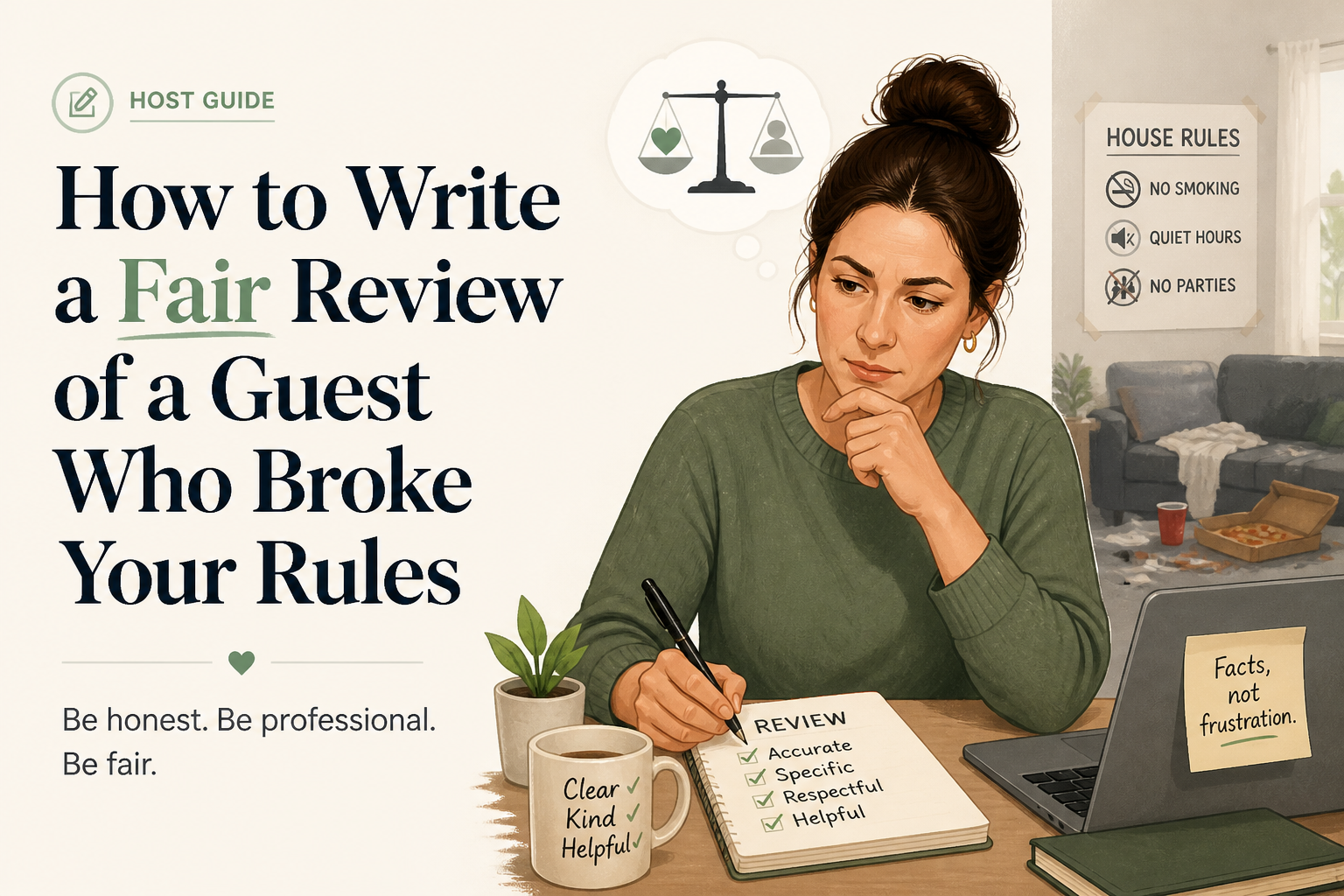
Key takeaways
- State house rules and consequences clearly, and address violations when they happen.
- Keep communication on the platform, take dated photos, and save relevant messages.
- Wait until you are calm, then write a short review describing observable behavior rather than character.
- Include issues other hosts would want to know in your review, and consider private messages for minor slips.
You already know honesty matters. The harder part is the actual writing. How do you describe a smoking incident, a surprise guest, or a trashed kitchen without sounding bitter, and without handing the guest an excuse to dismiss you? Hosts in a large community discussion shared the habits that work. Here they are in the order you will need them.
Start Before the Review Exists
The best review begins with your house rules. State plainly what is not allowed, and attach a consequence. One host includes in her terms that violations such as smoking, parties, or undisclosed guests and pets may result in a guest being asked to leave, and she words the no refund policy strongly. That clarity is not unfriendly. It means that if you ever have to write about a violation, the guest was told about it in advance.
Then enforce when it happens, not only afterward. Several hosts said the right move is to address a violation the moment you notice it, and in serious cases to ask the guest to leave and report the incident to Airbnb. A review is a record of what happened. It should not be the first time a guest hears there was a problem.
Document While You Can
A fair review is easier to write when you have proof. Keep all communication inside the platform, take dated photos, and save any messages that matter. One host who advises charging guests for cleaning and damage after a violation reminded the group that Airbnb will expect evidence before taking action. Proof gathered at the time is far more convincing than memory reconstructed afterward.
It also protects you emotionally. When you are annoyed, it is tempting to exaggerate. Having photos and messages to point to keeps you focused on what actually occurred.
Wait, Then Write With a Clear Head
If you are angry, wait. Some hosts recommended giving yourself a day before posting anything. You still have time, because the review window is limited, so check the current deadline in your account. A review written calmly will be shorter, clearer, and more credible than one written in the heat of the moment.
One thing hosts in the thread pointed out is that guests generally do not see your review until after they have written theirs. If that holds for your account, you can take a moment to draft without worrying about a reply being shaped by what you say. Use that breathing room to make your wording better, not harsher.
Lead With What Was Genuinely Good
One host described a review she had just written after a stay that ended with the house left filthy in a way she had never seen. She began with what was true and positive: the guests had been nice, polite, and communicative. Then she stated the problem plainly. This structure came up repeatedly, and it works for a reason.
It is not a trick for softening bad news. It makes the honest part land as fact rather than frustration. A reader who sees fair praise followed by a specific problem trusts the whole review more. Only include praise if it is true. If nothing positive applies, skip it rather than inventing something.
Stick to What You Can Observe
The most consistent advice was to describe behavior, not character. Say that the guest smoked in a unit marked non smoking, or that more people stayed than were booked, or that the home required extra cleaning, rather than calling the guest dishonest or inconsiderate. Facts are difficult to argue with. Opinions invite debate.
Keep it short. Two or three sentences is usually enough. You are not building a legal case. You are giving the next host the information they would want. A short, factual review gets read, believed, and remembered.
Decide What Belongs in Public and What Belongs in a Message
Not every issue needs to be in the public record. A minor, one time inconvenience might call for a quiet note. Several hosts send a private message in addition to their review, saying what went wrong in a polite, professional tone. One host who does both said there is a nice and professional way to do it, but she always writes it in her review as well.
A good rule of thumb: if another host would want to know before accepting this guest, it belongs in the review. If it was a small slip that does not affect anyone else, a private word may be enough. Decide in advance where your line sits so you are not improvising each time.
Report When the Situation Calls For It
Reviews are not the only tool. For serious violations, such as parties, safety issues, or undisclosed guests, report the incident to Airbnb for support, ideally as it happens. A report creates a record that does not depend on a guest's willingness to cooperate, and it may matter if there is a dispute later.
Some hosts also block a guest from booking again, which is a separate step from the review. You are allowed to protect your own property in addition to warning others.
A Simple Shape You Can Reuse
If you want a structure to keep in mind, it looks like this in prose. One sentence of genuine credit. One or two sentences stating exactly what occurred. A closing line, if you wish, stating whether you would host them again. That is all. Hosts who follow a shape like this tend to write reviews that feel fair even when the facts are unpleasant.
The aim is not to win an argument. It is to leave an accurate record, calmly, so the next host can make a better decision than you were able to make. Write it that way, and you will rarely regret what you posted.
Keep reading
Airbnb optimization specialist, Superhost, and founder of one of the largest Airbnb host communities.
Continue Reading
Chosen for you from The Optimization Journal.
 Why Honest Guest Reviews Protect Every Airbnb Host
When a guest breaks your house rules, silence feels safer than honesty. Here is why the hosting community overwhelmingly argues that an honest review is a duty to the next host.
5 min read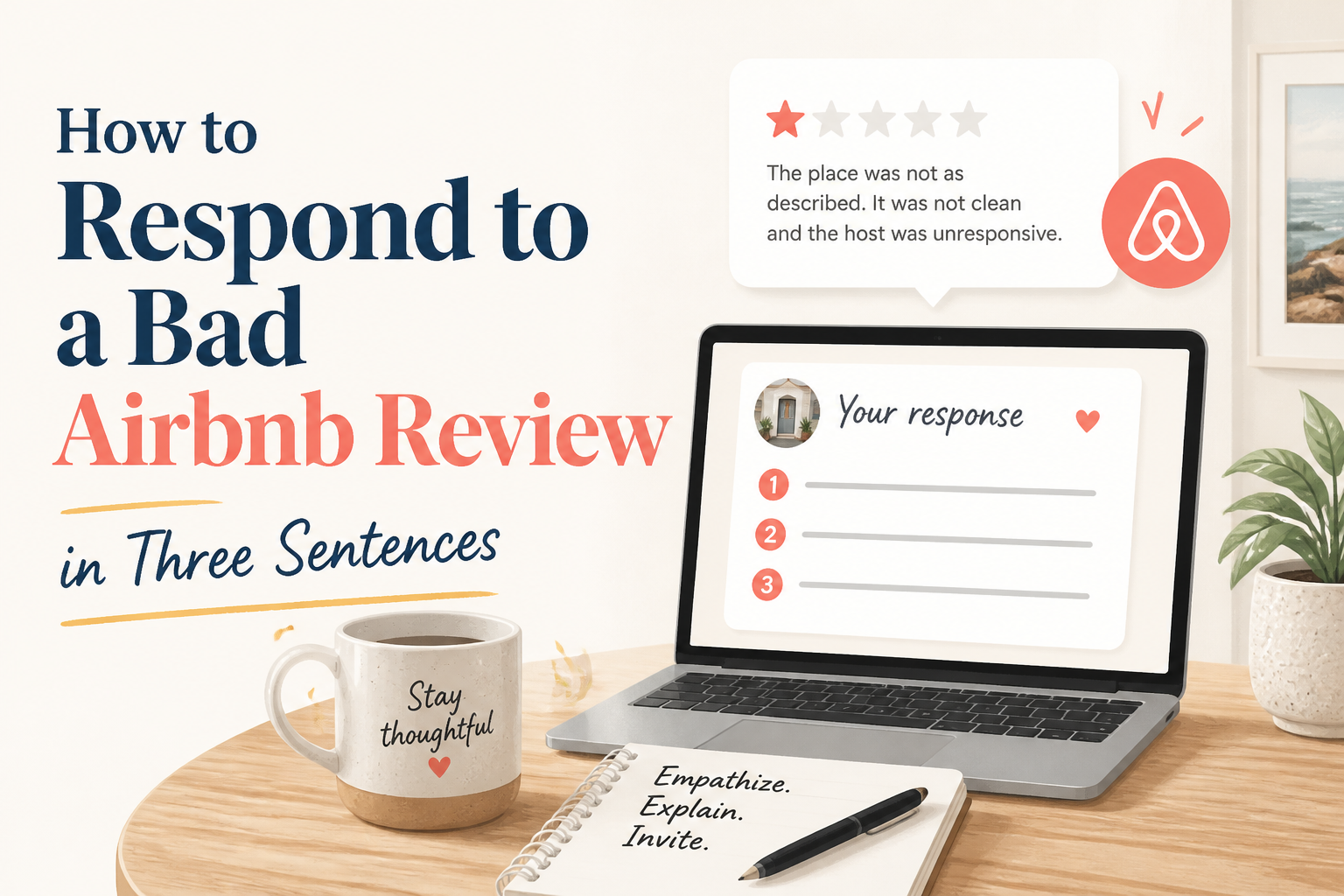 How to Respond to a Bad Airbnb Review in Three Sentences
A practical formula for replying to a negative review: acknowledge, clarify, and close with confidence, plus what to avoid and when not to reply at all.
4 min read What a Reply to a Bad Airbnb Review Is Really For
Should you answer a bad review or let it sit? Hosts are split, but most agree on one thing: the reply is written for the next guest, not the one who complained.
5 min read How to Write an Event Policy That Actually Protects Your Vacation Rental
A no-party rule is only as good as how clearly it's communicated. Here's how experienced hosts define, enforce, and occasionally profit from their event policies.
5 min read Why Most Airbnb Hosts Let Small Damage Slide
Ask a crowd of Airbnb hosts whether they file a claim for every broken glass and the answer is almost always no. Here is the reasoning behind that shrug, and what it reveals about hosting as a business.
5 min read