
How to Respond to a Bad Airbnb Review in Three Sentences
A practical formula for replying to a negative review: acknowledge, clarify, and close with confidence, plus what to avoid and when not to reply at all.
Key takeaways
- Pause before replying, then write for future guests rather than trying to persuade the reviewer.
- Keep replies brief, factual, and polite: acknowledge the experience, clarify facts if needed, and close with goodwill.
- Correct factual inaccuracies without arguing against feelings, and include the repair date when you have fixed a valid complaint.
- Avoid sarcasm, guest blame, long explanations, and generic scripts that ignore the guest’s specific concerns.
A negative review lands, and your first instinct is to explain everything. Resist it. Hosts who handle these moments well tend to write far less than you would expect, and they follow a simple shape. This guide walks through that shape step by step, along with the mistakes that quietly undo a good reply.
Step One: Wait Before You Write
The most useful habit has nothing to do with wording. Give yourself time. A reply written while you are angry sounds angry, however carefully you phrase it, and it will sit on your listing far longer than your frustration lasts. Read the review, close the app, and come back later. Many hosts treat this pause as non negotiable.
When you return, reread the review once and ask a single question: is anything in it factually wrong? That answer determines almost everything about your reply.
Step Two: Decide Who You Are Writing For
You are not writing for the reviewer. They have moved on, they may never read your reply, and they probably will not be persuaded by it. You are writing for the person comparing your listing with three others tonight. One host described her replies as always being for other guests reading the reviews. Hold that reader in mind and the rest gets easier, because you stop trying to win and start trying to reassure.
Step Three: Use the Three Sentence Shape
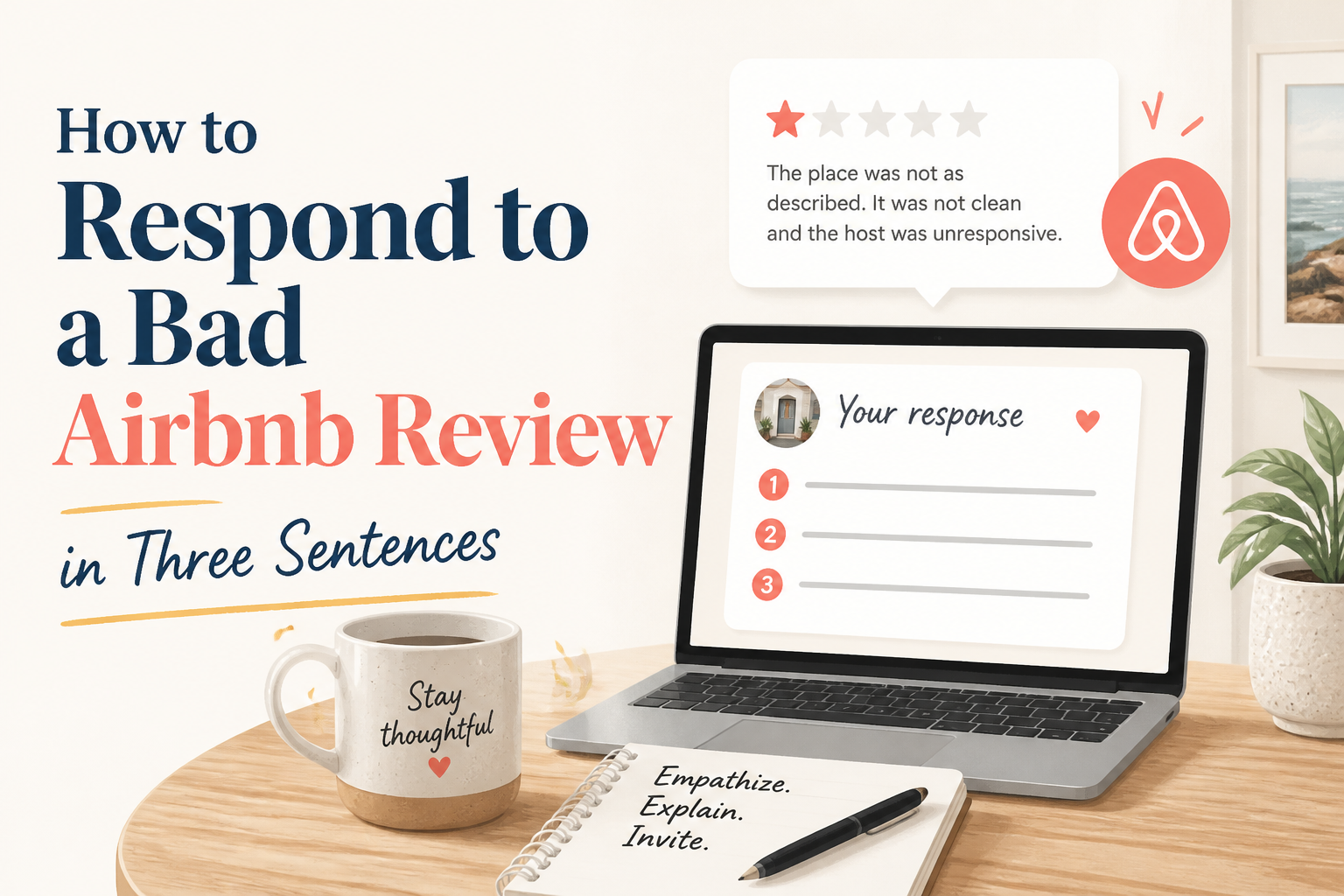
Here is the shape in prose. Your first sentence acknowledges the guest and their experience. A simple thank you for the feedback, with a note that you are sorry the stay did not meet expectations, is enough. Your second sentence clarifies or corrects, but only if something factual needs it. Your third sentence ends with confidence and goodwill, such as noting that you take feedback seriously and look forward to welcoming future guests.
That is it. Hosts who responded this way often kept their replies to a few lines, and several described the same priorities: stay brief, stay factual, stay polite. If a sentence does not serve one of those three jobs, cut it.
Correct Facts, Not Feelings
This is where most replies go wrong. You cannot argue someone out of a feeling, but you can state a fact. One host whose bathroom was called tiny with a low ceiling replied with the exact measurements. Another responded to claims about narrow stairs and nothing to do locally by clarifying the layout and listing nearby options, so future guests would arrive with accurate expectations.
If the review is subjective, such as pillows that were too soft or a place that felt dated, usually the best response is a short thank you or nothing at all. Correct what can be measured. Let opinions stand.
Name the Date You Fixed It
If the complaint was valid and you fixed the problem, say so specifically. One host suggested including the date, such as noting that a television was repaired right after the guest's stay, followed by an invitation to return and enjoy it. A date is far more credible than a general promise to do better, and it turns a complaint into evidence that you respond.
It also helps to build feedback loops before the review ever happens. One host messages guests on the second day of their stay asking them to reach out if anything needs attention. That way, her reply to a negative review can honestly note that guests are invited to tell her during the visit, and that she would have fixed things had she known.
What to Leave Out
Several habits turn a decent reply into a damaging one. Avoid sarcasm and any hint of blaming the guest, even if the guest was at fault. Avoid long explanations, because length reads as defensiveness. Avoid generic scripts that could apply to any listing, since a reply that ignores what the guest actually said looks insincere. One host joked that some replies thank the guest for exploring a fun town while ignoring every complaint, which is exactly the kind of non answer to avoid.
Finally, avoid apologizing for things you did not do. You can express empathy without agreeing to claims you believe are inaccurate. A line acknowledging the experience, followed by a calm correction, lets you do both.
Using AI Tools Without Losing Your Voice
If you use an AI tool to draft replies, treat its output as a rough version. Hosts in a large community disagreed about this. Some use these tools every time and find them helpful, while others warned that readers can tell when something was not written by a person. A sensible approach is to ask a tool for a calm draft, then rewrite it in your own words, removing anything generic and adding the specific detail that only you would know.
When Not to Reply
Sometimes the right move is no reply. If a review is vague, subjective, and surrounded by dozens of strong ones, a response may only spotlight it. Several hosts leave these alone and let their overall record speak. Decide your default in advance so you are not debating it each time.
And if a review appears to break the platform's own rules, for example it comes from a guest who never raised an issue during the stay or seems retaliatory, consider reporting it rather than replying. One host contacted Airbnb about a review from a guest who clearly never read her listing details, received a report number, and was told the review would be removed. Results vary, but reporting is a separate path worth trying first when it applies.
Keep It Consistent
Whatever approach you choose, apply it the same way each time. A host who sometimes fires back and sometimes goes silent looks reactive, while a host who always replies briefly and calmly looks professional. Write your default down, keep your replies short, and remember who they are really for.
Keep reading
Airbnb optimization specialist, Superhost, and founder of one of the largest Airbnb host communities.
Continue Reading
Chosen for you from The Optimization Journal.
 CornerstoneWhy Airbnb Reviews Matter More Than You Think
Most hosts think reviews are proof of a great stay. They're much more than that—they're one of the biggest influences on whether future guests book your property. ---
2 min read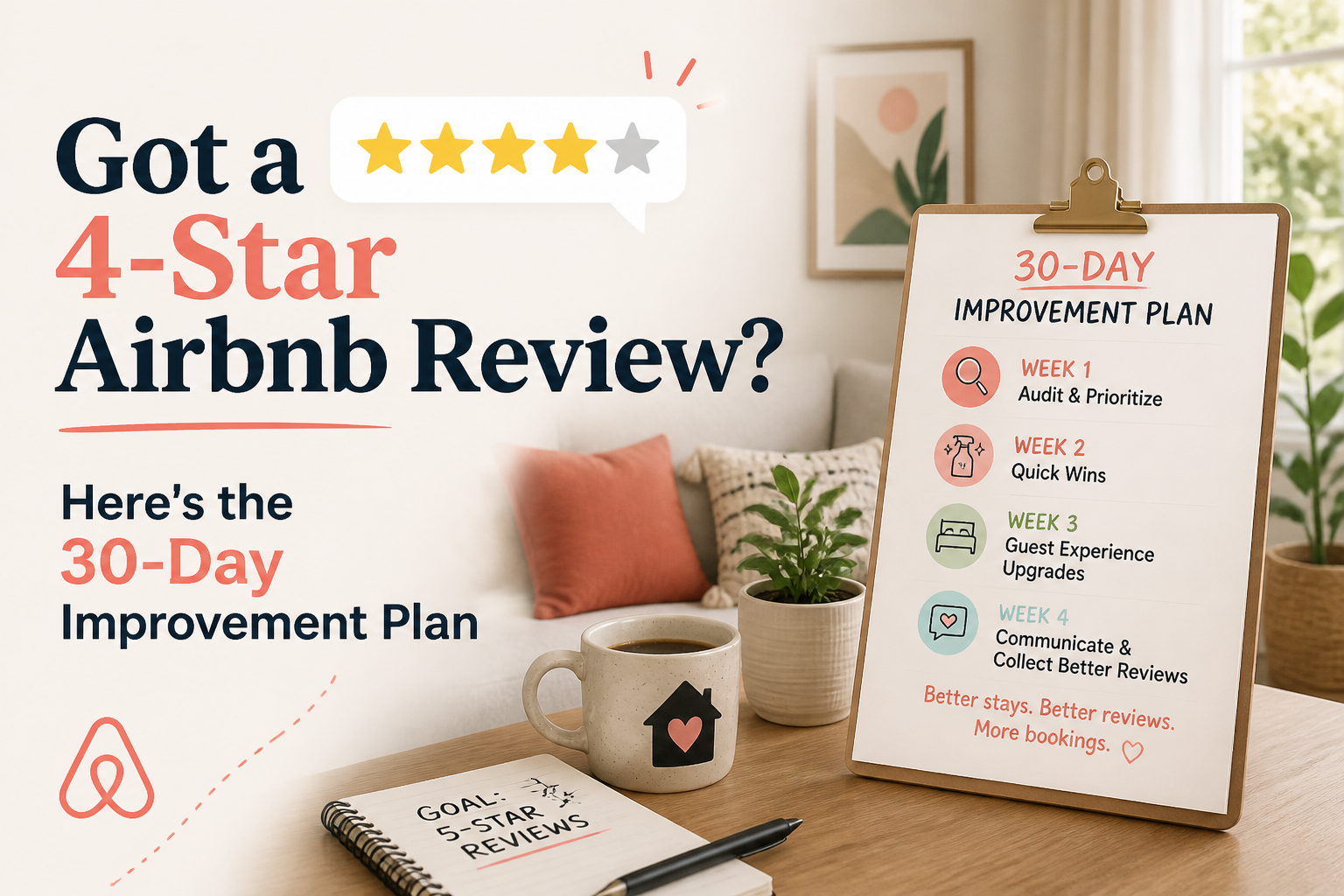 CornerstoneGot a 4-Star Airbnb Review? Here's the 30-Day Improvement Plan
A 4-star Airbnb review can be frustrating, especially when a guest seemed happy. Learn how to respond professionally, identify what went wrong, and turn feedback into a practical 30-day plan for improving your listing and guest experience.
19 min read What a Reply to a Bad Airbnb Review Is Really For
Should you answer a bad review or let it sit? Hosts are split, but most agree on one thing: the reply is written for the next guest, not the one who complained.
5 min read How to Write a Fair Review of a Guest Who Broke Your Rules
A step by step approach to reviewing a rule-breaking guest honestly and professionally, from the moment of the violation to the final sentence you publish.
4 min read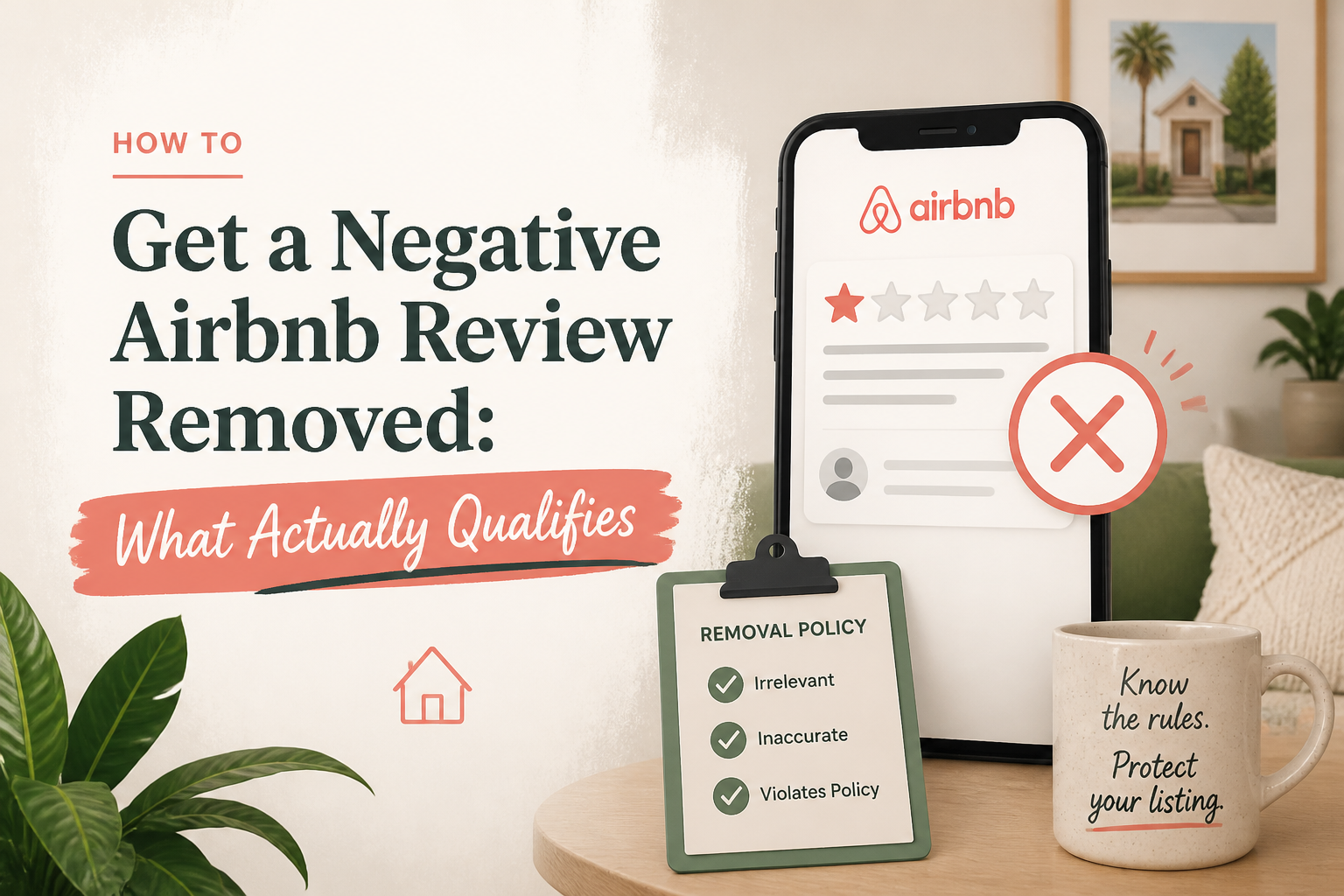 How to Get a Negative Airbnb Review Removed: What Actually Qualifies
A bad Airbnb review is frustrating, but not every negative review qualifies for removal. Here’s how to tell whether a review may violate Airbnb’s policy, what evidence matters, and how to build a stronger removal request.
6 min read