
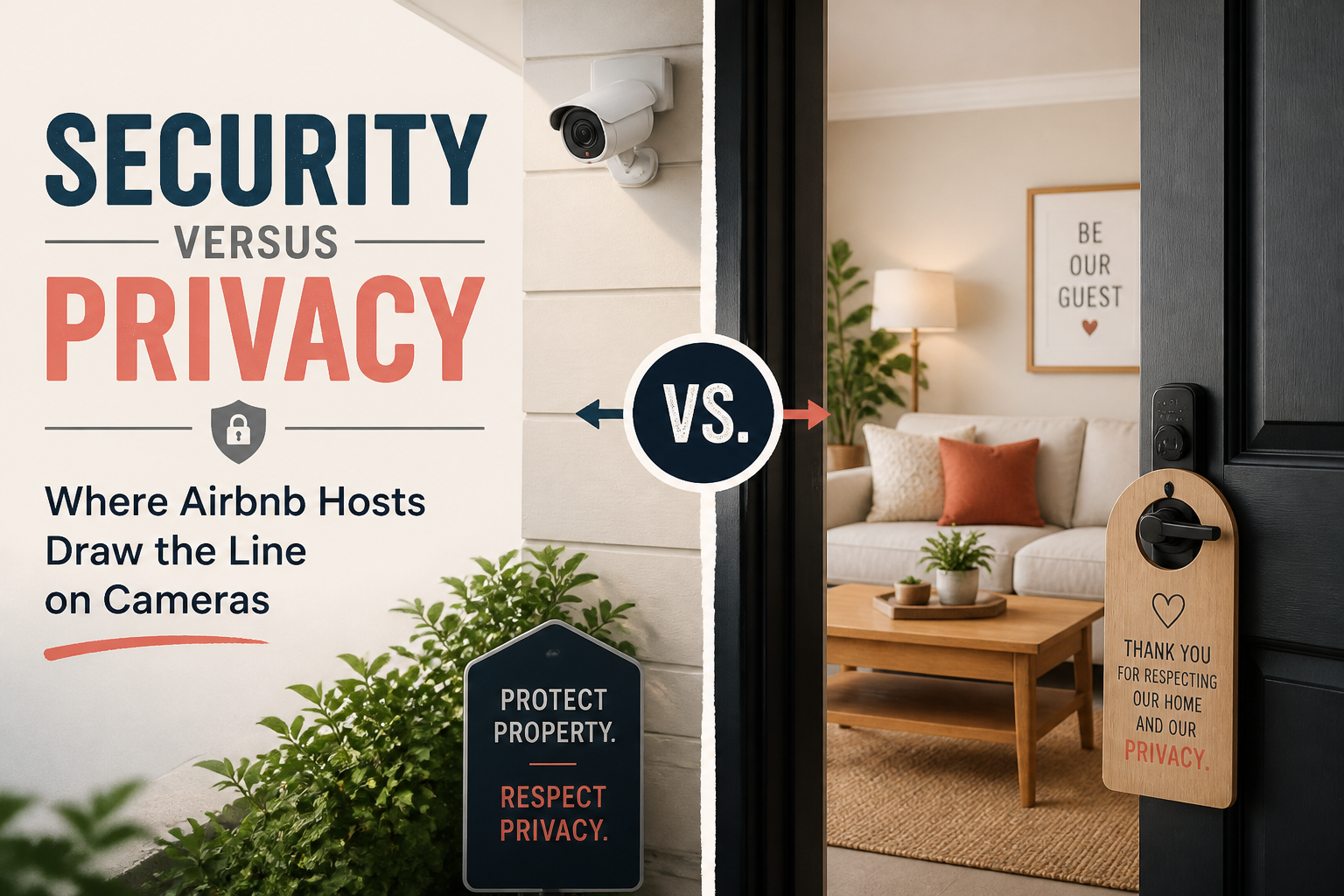
Security Versus Privacy: Where Airbnb Hosts Draw the Line on Cameras
Most hosts use outdoor cameras and none inside. What the community's answers reveal about protecting a property without making guests feel watched.
Key takeaways
- Choose the least intrusive tool that solves a specific problem at your property.
- Keep cameras outside and consider how their placement will feel to guests.
- Consider noise monitors to measure sound levels without recording conversations.
- Clearly disclose cameras and monitors in your listing, and check Airbnb's current recording device policy.
Few topics make hosts and guests react as differently as cameras. A host sees an investment protection tool. A guest sees a lens pointed at their vacation. When hosts in a large community were asked whether they use cameras, noise monitors, or rely on trust, the answers fell into a surprisingly clear pattern. Almost everyone drew the same line, and the line says a lot about how hosts think about the people staying in their homes.
The Line at the Door
The dominant answer was simple: outside cameras only. Hosts covered entries, driveways, and shared exterior spaces, and stopped firmly at the door. One host summed it up as outside cameras only, for security and safety, and many others said nearly the same thing. Nobody in the discussion described interior surveillance as a normal practice, which fits with the general expectation that guests have privacy inside the space they are paying for.
What changes the conversation is how consistent the reasons were. Hosts described cameras as a way to protect property when it is unoccupied, to confirm the number of guests matches the booking, to catch pets that were not disclosed, and to have evidence if something goes wrong, such as a fall, a fight, property damage, or an unauthorized party. In almost every case, the stated target was the property, not the person.
Intent Is Not the Same as Impact
That distinction between target and experience is where it gets uncomfortable. One host who was staying at a rental while repairing her own home said the first thing she now checks before booking is whether there are cameras near the backyard or pool. She finds them genuinely strange, even though she understands why a host might install them. Her view as a guest was shaped by exactly the kind of listing she herself might operate as a host.
This gap between a host's intent and a guest's reaction is easy to miss. A host looking at a pool camera sees liability and safety. A guest sees a recording device near a place where they might be in swimwear. Both views are reasonable, and the difference suggests that where a camera points matters as much as why it was installed.
Noise Monitors as a Different Kind of Tool
Some hosts moved toward decibel based noise monitors instead of, or alongside, cameras. A host who advises other hosts professionally recommended pairing exterior cameras with discreet noise monitors, noting that they measure sound levels without recording conversations and can help deter parties. Another host noted that anyone sharing a wall with neighbors, such as in a condo, would almost need one to keep a rental from becoming a neighborhood problem.
The appeal here is that a noise monitor measures a behavior, loudness, rather than watching a person. For hosts who want to prevent parties without watching guests, that is a meaningful difference. Cost shaped the choice too. One host skipped subscription noise monitoring because providers charge per device, and with several structures plus outdoor space, the fees add up quickly.
The Case for Trust Alone
A smaller group answered with a single phrase: trust only. Some pair that trust with Airbnb's protection program rather than any device of their own. Others use light touch sensors, such as door and motion sensors, just to confirm guests arrived and left as expected and that the house is empty when it should be. One host manages risk entirely by reviewing booking requests carefully, saying she has not had an issue yet.
These approaches shift the decision point. Instead of asking what to monitor during a stay, they ask who is allowed to stay at all. For hosts who believe screening does most of the protective work, cameras can feel redundant.
Proximity Cuts Both Ways
Distance emerged as a surprisingly strong factor, and it pulled in opposite directions. A host who lives next door said she needs no cameras because she can simply see what is happening. Another who shares the property with guests installed exterior cameras precisely for that reason, to protect everyone involved, including himself. A host who lives on the property in a high tourist area said he runs three outside cameras partly because of foot traffic from strangers, and noted he has had only two negative guest experiences in a year and a half.
Hosts who live far away leaned heavily toward cameras. One said she uses outside cameras only because she does not live nearby. For her, a camera is not about distrusting guests. It is a way of being present when she cannot be.
Disclosure Is the Dividing Line
If there is one point where nearly everyone agreed, it is disclosure. Hosts who recommended cameras and monitors almost always added that you should state them clearly in your listing. Be sure to check Airbnb's current policy on recording devices, because rules about where devices are allowed and how they must be disclosed can change. What the hosts understood is that a device a guest was never told about, however well meant, changes the nature of the trust question entirely.
What This Tells You
The hosts in this conversation were not divided between paranoid and trusting. They were solving different problems. A remote property, a shared wall, a tourist heavy street, or a single room in your own home each create different risks. The cameras and monitors hosts chose were answers to those specific gaps, not statements about guests in general.
That is worth carrying into your own decision. Ask what exact problem you are trying to solve, and choose the least intrusive tool that solves it. If you cannot name the problem, you may not need the device. If you can, keep it outside, disclose it clearly, and remember how it will feel from the other side of the lens.
Keep reading
Airbnb optimization specialist, Superhost, and founder of one of the largest Airbnb host communities.
Continue Reading
Chosen for you from The Optimization Journal.
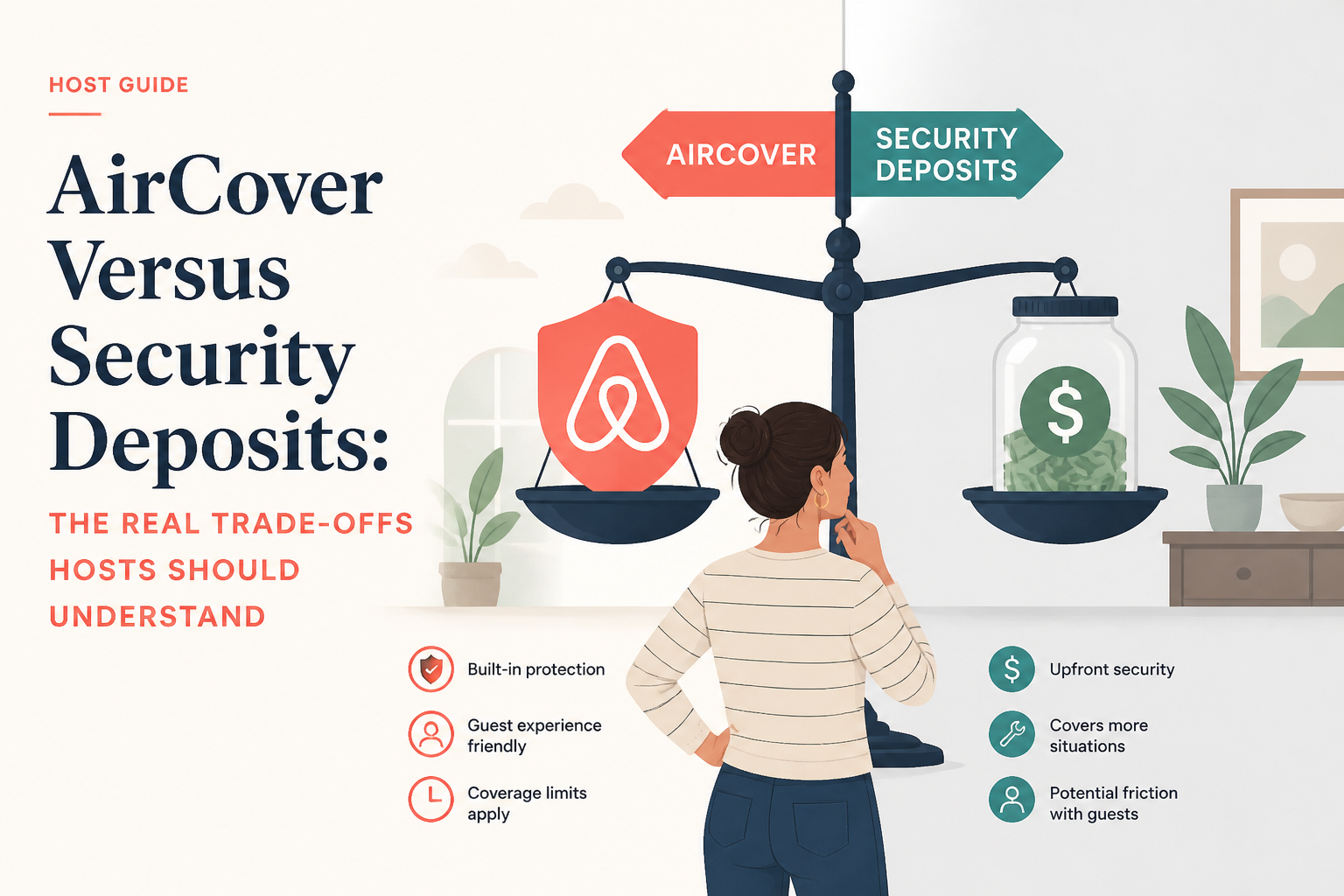 AirCover Versus Security Deposits: The Real Trade-Offs Hosts Should Understand
Both approaches work for different hosts in different situations. What makes the difference is not which one you choose but whether you understand what each one actually does and does not do.
5 min read How to Write an Event Policy That Actually Protects Your Vacation Rental
A no-party rule is only as good as how clearly it's communicated. Here's how experienced hosts define, enforce, and occasionally profit from their event policies.
5 min read Parties and Vacation Rentals: Where Hosts Draw the Line
Every host eventually gets a booking that makes them pause. How you respond to that moment — before it becomes a problem — is what separates a clear policy from a costly lesson.
5 min read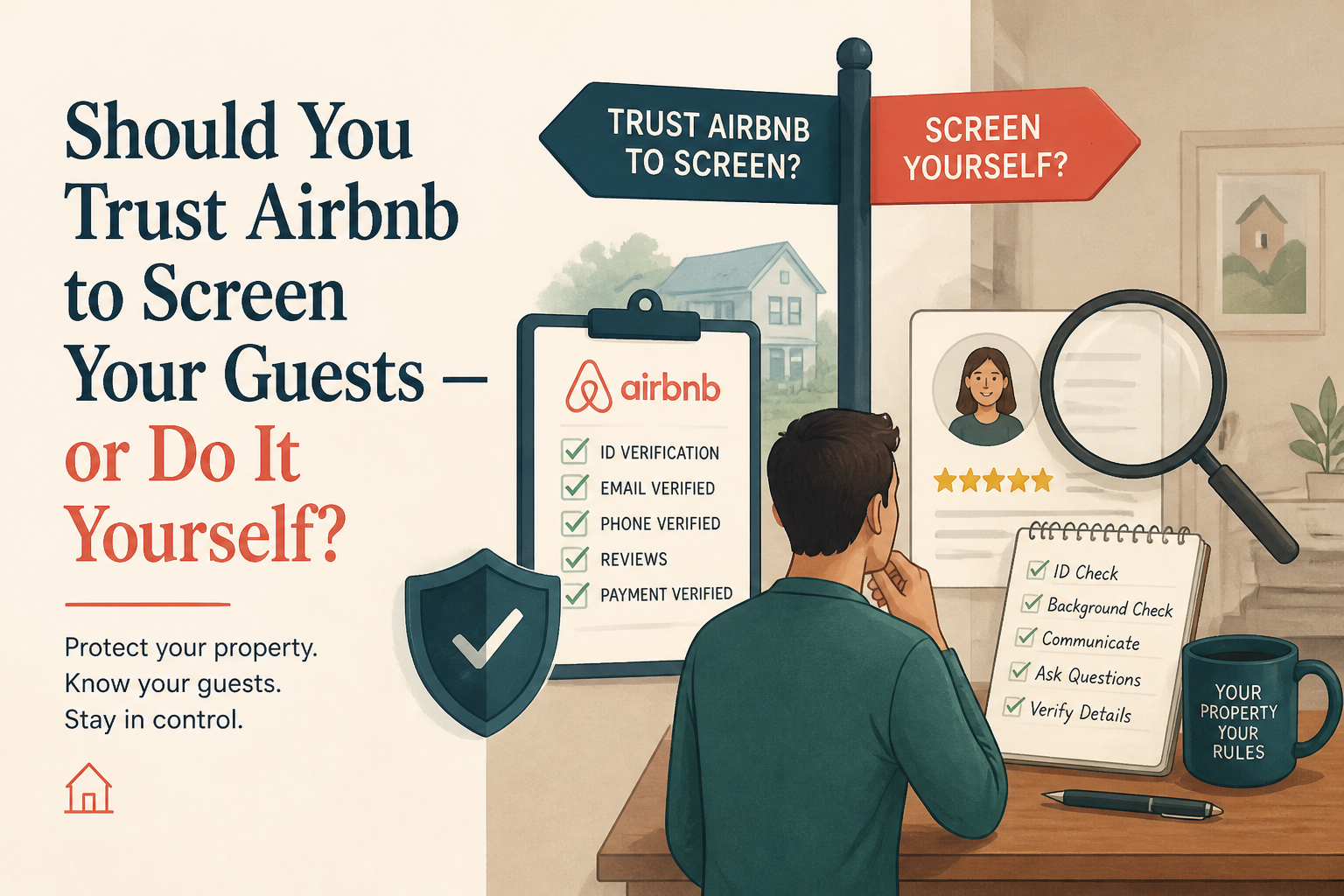 Should You Trust Airbnb to Screen Your Guests — or Do It Yourself?
Airbnb has a verification system. But a growing number of hosts have stopped relying on it alone — and what they've found has changed how they host.
5 min read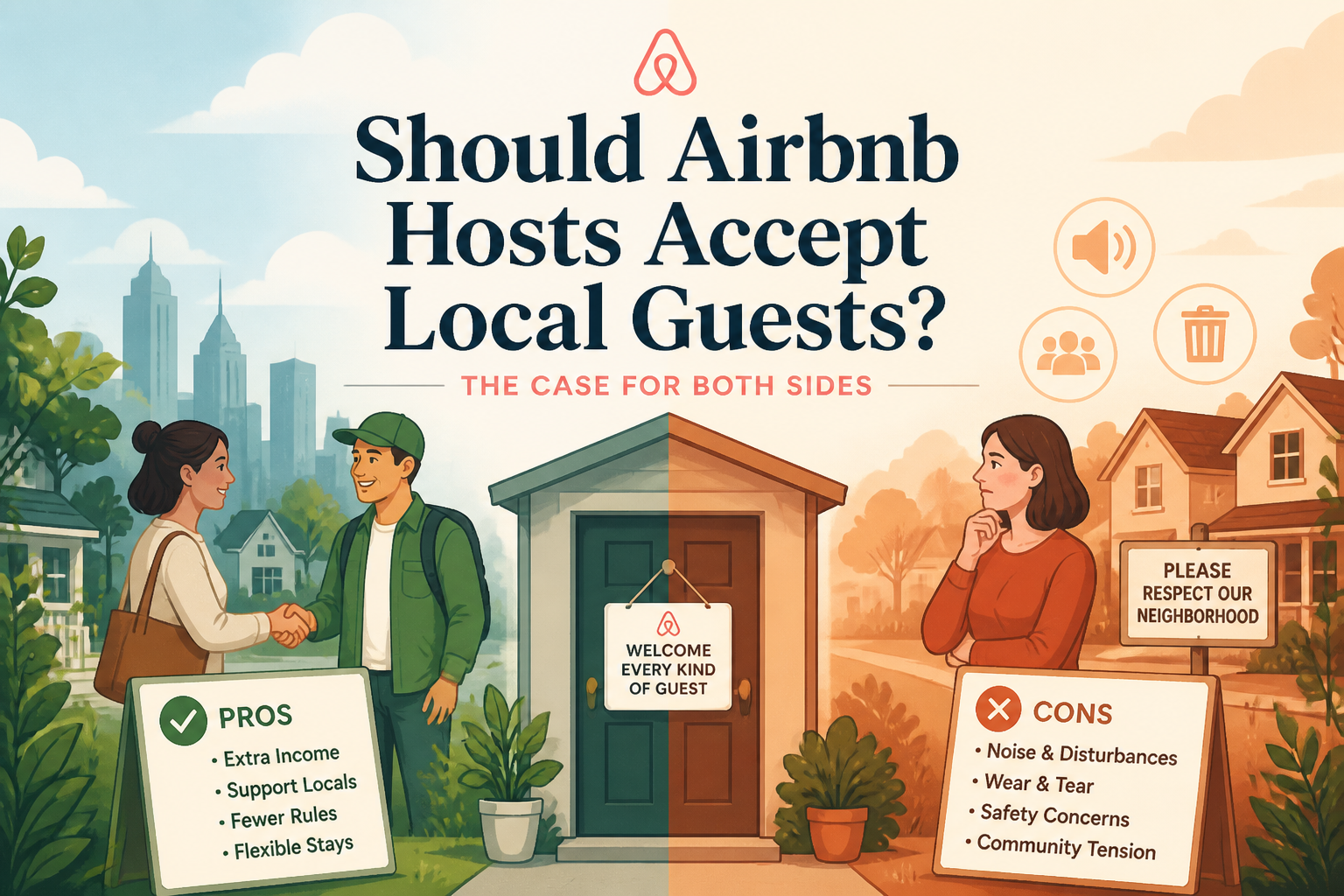 Should Airbnb Hosts Accept Local Guests? The Case for Both Sides
Few hosting decisions divide opinion more sharply than whether to accept guests who live nearby. Here is what hosts on both sides have learned from experience.
5 min read