
The True Cost of Generosity: Should You Stock Your Airbnb Like Home?
Most hosts say stock it like home, but one host did the math and could not afford it. A closer look at generosity, margins, and what guests really remember.

Key takeaways
- Match your stocking to your pricing, your guests, and your goals.
- Check whether your rates can support generosity before stocking more.
- If your budget is tight, consider raising rates or focusing on essentials.
- Communicate clearly what is included so guests know what to expect.
When hosts in a large community were asked whether they stock their rental like home or stick to bare basics, the response was lopsided. Dozens said some version of like home. Several said more than home. A handful said bare minimum. But the most revealing comment came from a host who did not choose a side. He laid out his numbers and said he simply could not afford the luxury.
The Host Who Did the Math
This host described earning less than one hundred euros per night for six people, then subtracting platform commission, an agency commission, a service charge, tax, and a cleaning fee of well over a hundred euros. From a three night stay, he said, he barely clears a hundred, and that is before electricity. He asked the group for guidance, clearly torn between wanting to be generous and watching his margins disappear.
It is an uncomfortable counterpoint, because it reminds us that hospitality is not free. Generosity is an expense. For some hosts, that expense is easily absorbed. For others, it is the difference between a profitable listing and one that barely covers its costs.
The Strong Reply
Another host answered without knowing he was replying. Hosts, he said, need to stop being cheap and should aim to offer more than a hotel room. Guests are paying good money, he argued, and they are staying with short term rentals less because of the nitpicking and nickel and dime stuff that has become common. In his view, generosity is a competitive advantage, not an indulgence.
These two positions do not really contradict each other. They describe different relationships to price. A host who charges enough to fund generosity can afford to be generous. A host who competes on low prices may not be able to, and that is a pricing problem as much as a stocking problem. The honest question is not whether generosity is good, but whether your rates can support it.
What Generous Hosts Described
The hosts who stock heavily were remarkably detailed. One listed cleaning products, dishwasher tabs, shampoo, conditioner, shower gel, hand wash, oil, vinegar, salt, pepper, tea, coffee, sugar, and biscuits, and called it simply the basics. Another stocks all spices, snacks, coffee pods, three towel sets per person, and a box for forgotten items with toothbrushes, floss, sunscreen, pain relievers, and bandages. Another provides pet beds, leashes, bowls, and waste bags for guests with dogs.
One verified host stocks more than she would for herself, centered on a full coffee and tea bar, and reports that nobody has ever stolen anything. For these hosts, the investment buys something concrete. Several said guests mention the stocking in reviews. One said guests tell her all they needed to bring was groceries. Another credited her habit of thinking of everything with a run of five star ratings and superhost status.
The Reputation Cost of Doing the Opposite
One story captured the other side. A host who was buying a new property discovered that the previous owners did not provide soap or shampoo and charged guests to use the laundry. Her response was immediate: they would not be doing that. It was not a financial calculation. It was a values judgment about how guests feel when a stay turns into a series of extra charges.
That instinct is worth taking seriously. Guests who are asked to pay for basics do not experience it as efficiency. They experience it as being treated like a transaction. A lean setup can work, but it works best when guests understand it from the start and do not feel nickel and dimed.
Where Restraint Makes Sense
Not every restrained host was cutting corners. One draws a clear line between rooms: hotel style toiletries in the bathrooms, minimal kitchen consumables, and high end furniture, interior design, and a waterfront view. For him, the money goes into the property itself. Another keeps the kitchen and cleaning supplies very well stocked, limits toiletries to basics, and provides no other consumables beyond coffee.
Theft and waste shaped some of these decisions. One host provides enough shampoo and toilet roll for a trip but deliberately avoids leaving excess in cupboards, and says she rarely has issues. Restraint, in these cases, was a reasonable response to experience rather than a lack of care.
The Middle Ground Is Large
Between these poles sits a big group of hosts who split the difference by category. One keeps the bathroom to soap, lotion, shampoo, conditioner, and body wash, while providing a fully equipped kitchen. Another stocks as if friends were visiting, without the alcohol, so guests can cook, clean, and relax. Another leaves forget something baskets in every bathroom that guests love, keeps the kitchen simple, and adds a small local gift.
This approach recognizes that guests do not value every item equally. Coffee, toilet paper, and cooking staples get used constantly. A pantry full of specialty items may not.
What It Means
The takeaway is not that you must stock everything. It is that your stocking should match your pricing, your guests, and your goals. Generosity is a strategy only when your numbers can support it. If they can, the hosts in this conversation make a convincing case that it pays off in reviews, loyalty, and reputation. If they cannot, the better move may be to raise your rates, or focus on essentials and communicate clearly what is included, rather than offering a generosity you resent.
Keep reading
Airbnb optimization specialist, Superhost, and founder of one of the largest Airbnb host communities.
Continue Reading
Chosen for you from The Optimization Journal.
 2 Airbnb Settings That Can Improve Visibility — and Still Cost You Money
A more open calendar and Airbnb’s newer discount tools may help your listing get seen. But more visibility does not automatically mean more revenue. Here’s how I would think about both.
3 min read Do Long-Stay Discounts Actually Make Financial Sense for Your Rental?
She stopped offering discounts. Her occupancy did not change. She made more money. Another host in a different market reached the exact opposite conclusion with equal certainty. Both ran the numbers.
4 min read Do Airbnb Welcome Gifts Actually Matter? Lessons From Baskets Nobody Touched
Some hosts swear by welcome gifts and others quietly stopped after nobody touched them. What the community's experience says about what guests actually notice.
4 min read Why Most Airbnb Hosts Let Small Damage Slide
Ask a crowd of Airbnb hosts whether they file a claim for every broken glass and the answer is almost always no. Here is the reasoning behind that shrug, and what it reveals about hosting as a business.
5 min read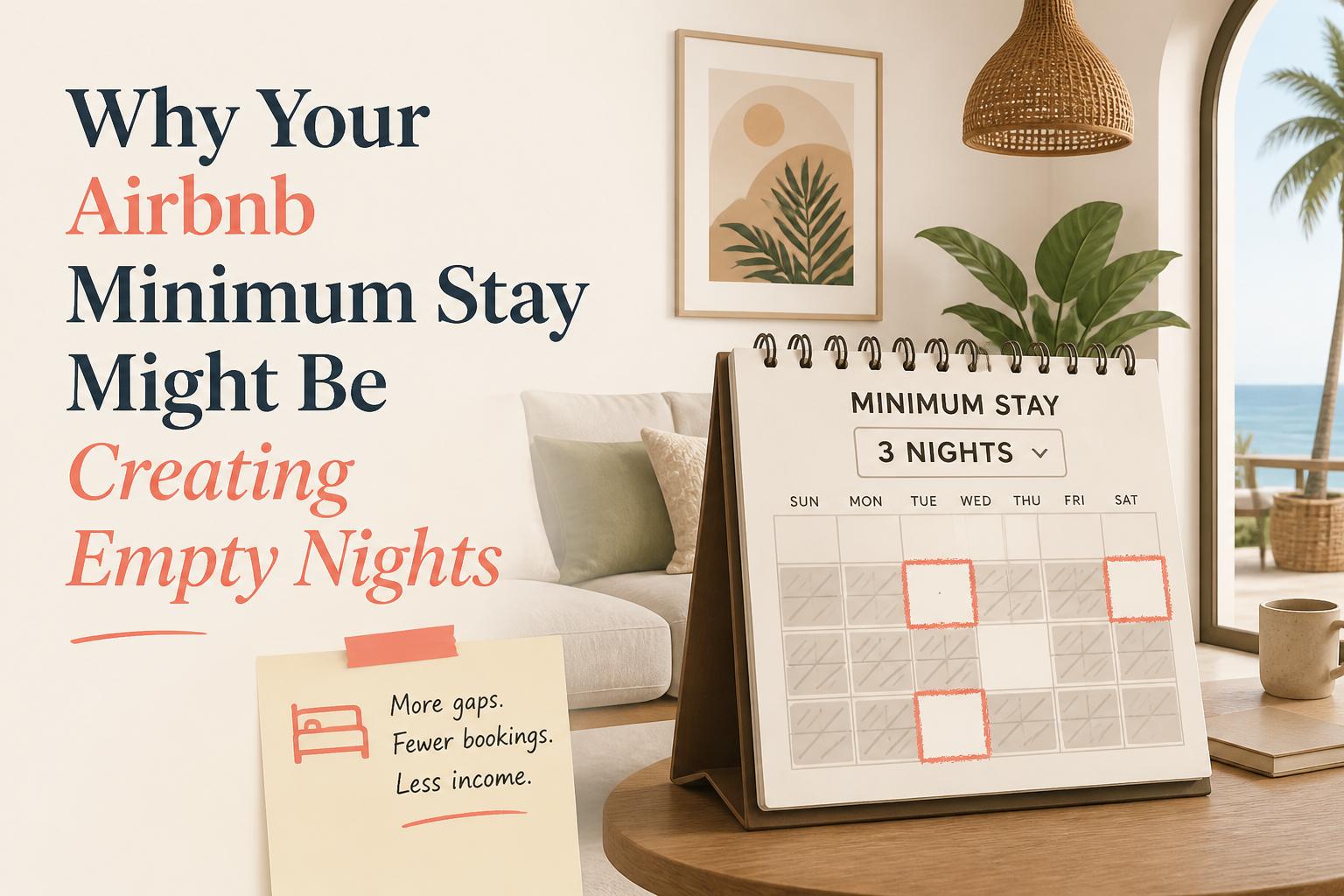 Why Your Airbnb Minimum Stay Might Be Creating Empty Nights
Minimum-stay rules can protect your calendar, reduce turnovers, and help you avoid low-value reservations. But the same rule can also create gaps that become nearly impossible to book. The trick is knowing when to hold your minimum and when the calendar is telling you to adjust it.
5 min read